
NordVPN is the best VPN for Brazil in 2026. It runs 20+ servers in Sao Paulo and unblocks Globoplay along with the big US streaming libraries. It also stayed among the fastest services in our speed runs and backs its no-logs policy with a sixth independent audit. The other four picks each win a narrower job, and we explain which one below.
We connected all five services to their Sao Paulo servers and loaded Brazilian channels such as RBTV, TV Gazeta and TV Cultura. We also ran NordVPN, Surfshark and CyberGhost on a slower 45 Mbps home line to see how they coped. The full method is in "How we tested VPNs for Brazil" further down the page.
If you live in Brazil or you're visiting, a VPN keeps your browsing private on hotel and airport Wi-Fi, hides the sites you visit from your internet provider, and gives you a way around court-ordered blocks. If you're a Brazilian living abroad, it gives you a Brazilian IP address, so Globoplay and your home services behave as if you never left.
The best VPNs for Brazil at a glance
All five picks put their Brazilian servers in Sao Paulo, so the real differences are speed, streaming reach, device limits and price. The speed column shows each provider's average across its whole server network rather than a Brazil-specific result, so treat it as a rough guide, not a head-to-head ranking.
| Provider | Buy | Brazil servers | Typical speed | Simultaneous connections | Streaming (Netflix / Globoplay) | Lowest price | Money-back guarantee |
|---|---|---|---|---|---|---|---|
 |
Check price → | Sao Paulo, 20+ servers | ~196 Mbps average | 10 | Yes / Yes | From about $3.49/mo | 30-day |
 |
Check price | Sao Paulo, 100+ servers | ~320 Mbps average (paid) | 10 (Free: 1) | Yes / Not listed | From about $3.49/mo | 30-day (prorated) |
 |
Check price | Sao Paulo, 2 locations | ~175 Mbps average | 10 / 12 / 14 by plan | Yes / Yes | $2.99/mo | 30-day |
 |
Check price | Sao Paulo, two dozen or so servers | ~188 Mbps average | Unlimited | Yes / Globo and SBT | $2.49/mo | 30-day |
 |
Check price | Sao Paulo, 70-odd servers | ~296 Mbps average | 7 | Yes / Labelled Globoplay server | From about $2/mo | 45-day |
Here is the short version of who each pick is for:
- NordVPN is the best all-rounder, with the strongest mix of speed, streaming and audited privacy.
- Proton VPN is the privacy-first choice, and the only pick with a free plan.
- ExpressVPN has the simplest apps and quick live chat, at a higher price.
- Surfshark is the best value for money, with unlimited devices on one account.
- CyberGhost makes streaming easiest, thanks to servers labelled by service.
What makes a good VPN for Brazil
Those five picks earned their places against a short list of tests. A good VPN for Brazil needs fast servers in Sao Paulo, an audited no-logs policy, and apps that keep working on the networks you actually use.
These are the criteria we weighed most heavily:
- Sao Paulo speed. A Brazilian IP is only useful if it streams without buffering.
- Streaming reach. Look for Globoplay and Brazilian channels from Sao Paulo, plus US Netflix and other home libraries from inside Brazil.
- A no-logs policy that has been audited. Your ISP already keeps connection records, so the VPN must not add another log.
- Security features. The baseline is a kill switch, DNS leak protection and a modern protocol such as WireGuard or one built on it. Obfuscation is a bonus if you expect blocks.
- Connections and price. Families and travellers carrying a laptop, phone and tablet need room for several devices. A money-back guarantee lets you try a service risk-free.
Test the specific Sao Paulo server you plan to use. In our runs, speeds varied a lot between servers on the same provider. If one server feels slow, switching to another Sao Paulo server often fixes it.
1. NordVPN: best overall VPN for Brazil
NordVPN is the only pick that clears all of those criteria without a weak spot, and it stayed out of our way from the start. Setup on Windows and on a phone was fast and easy, and the apps were straightforward from the first launch. Once we were on a Brazilian IP, RBTV and TV Aratu ON loaded without trouble.
All of NordVPN's 20+ Brazilian servers are in Sao Paulo. Its NordLynx protocol is built on WireGuard, and the apps also offer OpenVPN, a kill switch, DNS and IP leak protection, obfuscated servers, Double VPN and Onion Over VPN. Threat Protection blocks ads, trackers and malware, servers run from RAM only, and one account covers 10 simultaneous connections across Windows, macOS, Linux, Android, iOS, browsers and routers.
On streaming, the Sao Paulo servers unlock Globoplay, Claro Video and Telecine. From inside Brazil, NordVPN also reaches US Netflix, Hulu, HBO Max, Prime Video, Disney+ and BBC iPlayer, which covers most travellers' home libraries.
Privacy is where NordVPN pulls ahead of most of the market. Its sixth independent no-logs assurance engagement was carried out by Deloitte Lithuania and issued on 12 December 2025, following earlier ones in 2018, 2020, 2022, 2023 and 2024. Pricing starts at about $3.49 a month on the 2-year Basic plan, or about $12.99 month to month. Every plan has a 30-day money-back guarantee. Our full NordVPN review covers the plan tiers in more detail.
NordVPN speeds on Sao Paulo servers
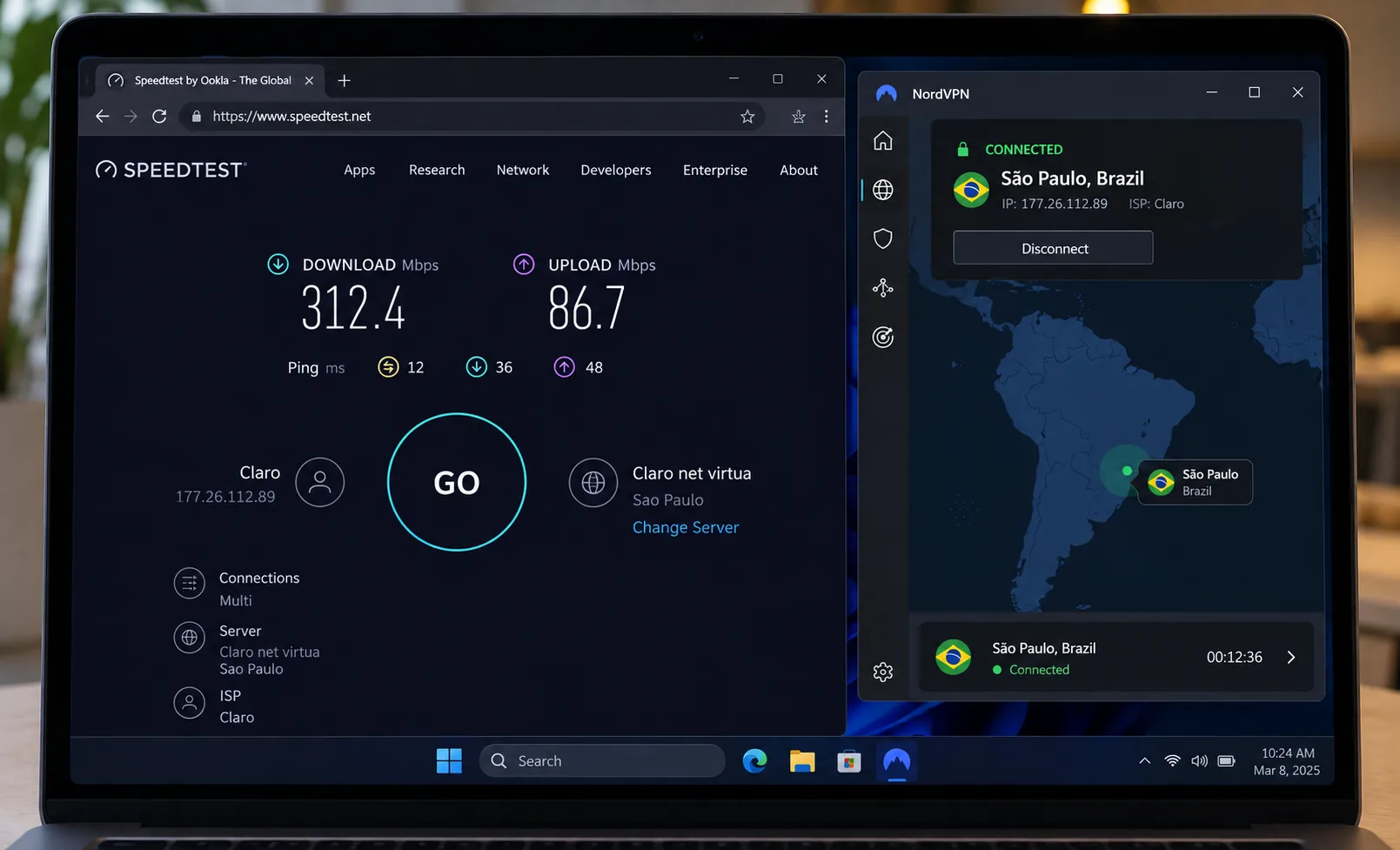
NordVPN was consistently among the fastest services we used on NordLynx, though an occasional server ran noticeably slower than the rest. When that happens, connecting to another Sao Paulo server is the quickest fix. On our slower 45 Mbps home line, NordVPN kept most of its speed at about 33 Mbps. That put it just behind Surfshark and CyberGhost on that connection.
On a 300 Mbps line, NordVPN held about 252 Mbps from a Sao Paulo server, a little ahead of ExpressVPN's roughly 240 Mbps on the same kind of connection. The table below shows the figures we have. Expect them to move with your line speed, the time of day and the protocol you pick.
| Provider | Sao Paulo server on a 300 Mbps line | Average across servers | 45 Mbps home line |
|---|---|---|---|
| NordVPN (NordLynx) | ~252 Mbps | ~196 Mbps | ~33 Mbps |
| ExpressVPN (Lightway) | ~240 Mbps | ~175 Mbps | Not measured |
| Surfshark (WireGuard) | Not measured | ~188 Mbps | ~39 Mbps |
For everyday browsing and HD video, any of the five picks is fast enough.
Pros
- Among the fastest services on NordLynx
- Globoplay, Claro Video and Telecine plus US streaming libraries
- Sixth independent no-logs audit, by Deloitte in 2025
- Fast, simple setup on Windows and mobile
Cons
- An occasional Sao Paulo server is slower than the rest
- Trails Surfshark and CyberGhost on slower home lines
- No free plan
2. Proton VPN: best privacy-first pick with a free plan
Proton VPN ties NordVPN on our scores and edges it on privacy credentials, but its apps took us longer to get comfortable with. The extra settings are useful once you know where they are. Beginners will find NordVPN's and ExpressVPN's layouts more obvious on day one.
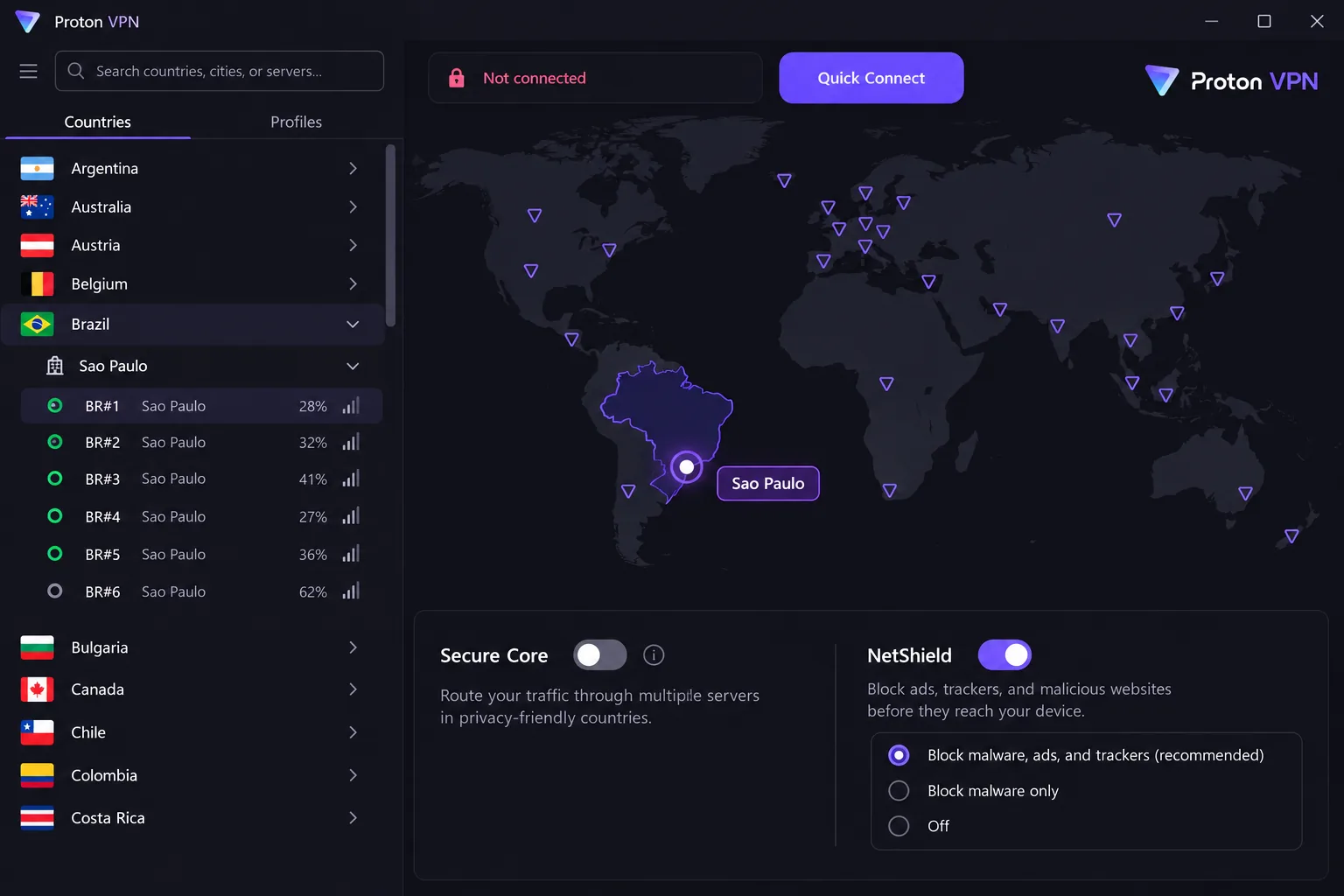
Proton AG is based in Switzerland. Its security is strong enough to keep your browsing private when you connect to a server in Sao Paulo. It runs more than 100 servers there, each with up to 10 Gbps connectivity, so it's the deepest Brazilian network on this list. The wider network covers 149 countries and 21,202 servers.
The feature list leans hard into privacy. Secure Core is a multi-hop mode that routes traffic through an extra server before it exits, and the Stealth protocol disguises VPN traffic if a network tries to block it. NetShield blocks ads, malware and trackers. You also get WireGuard, OpenVPN, a permanent kill switch, split tunneling, P2P servers with port forwarding, and Tor over VPN, all inside open-source apps. Proton completed a fifth consecutive annual no-logs audit in May 2026. The audit found no logging of browsing, DNS, destinations or connection metadata.
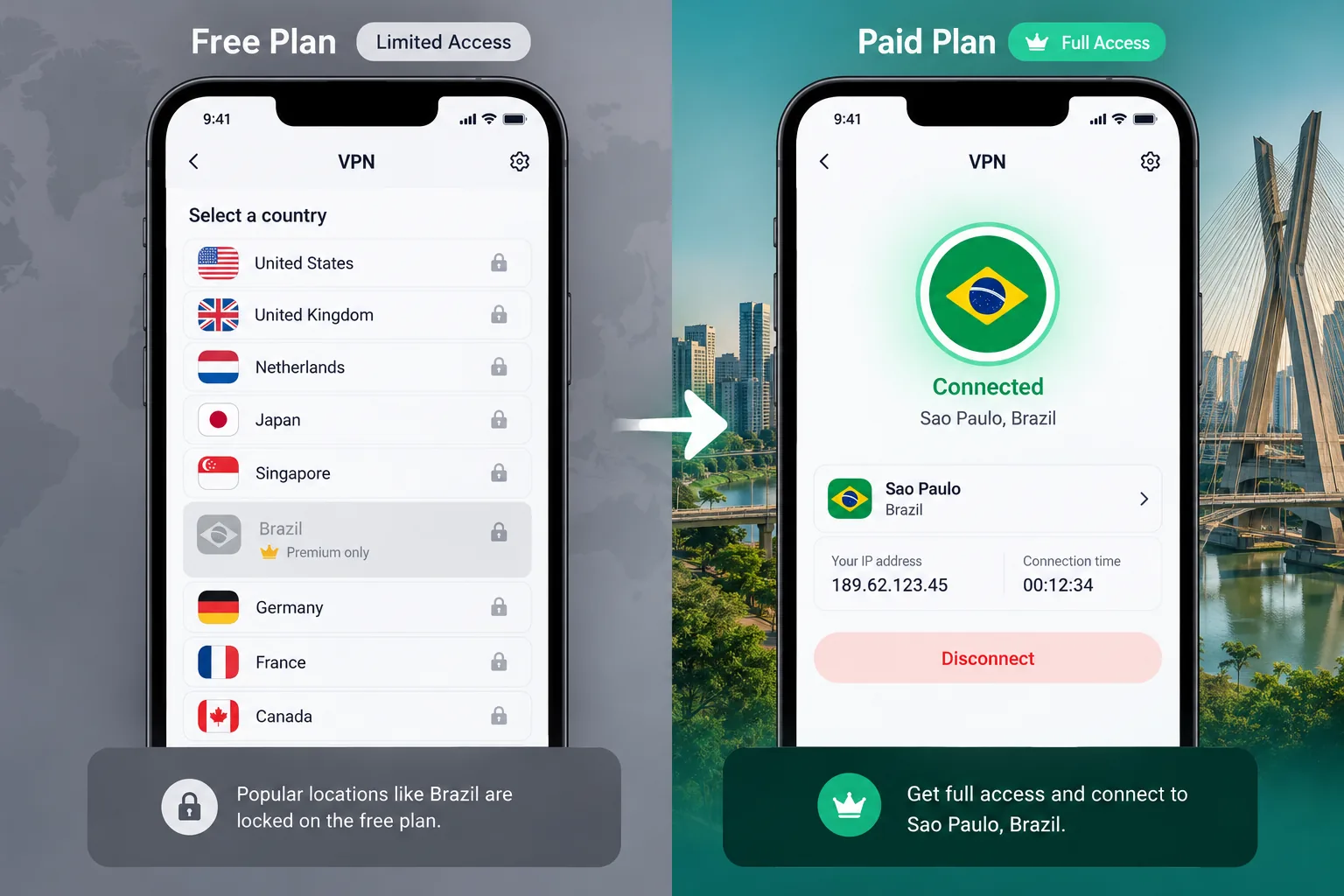
There is one Brazil-specific catch, and the free tier showed it to us quickly. We opened the free app and went looking for Brazil in the server list, but there was no Brazilian location to pick. The free servers we did get were noticeably slower than the paid ones, and when we tried to start a stream on one, it wouldn't play. We could only connect to Sao Paulo after switching to a paid plan, so getting a Brazilian IP from Proton means paying.
Proton's Brazil page lists Netflix, Prime Video and Disney+ support but not Globoplay, so look elsewhere if Globoplay is the main reason you're buying. VPN Plus costs $9.99 month to month, or from about $3.49 a month on the 2-year plan. It covers 10 devices and comes with a 30-day money-back guarantee, prorated to the time you haven't used. Our Proton VPN review goes deeper on Secure Core.
Pros
- More than 100 servers in Sao Paulo
- Swiss jurisdiction and five annual no-logs audits
- Stealth protocol for networks that block VPNs
- Free plan with no data limit
Cons
- Free plan has no Brazilian servers and can't stream
- Apps take longer to learn than NordVPN's or ExpressVPN's
- Globoplay isn't on its listed streaming services
3. ExpressVPN: easiest Brazil VPN to use
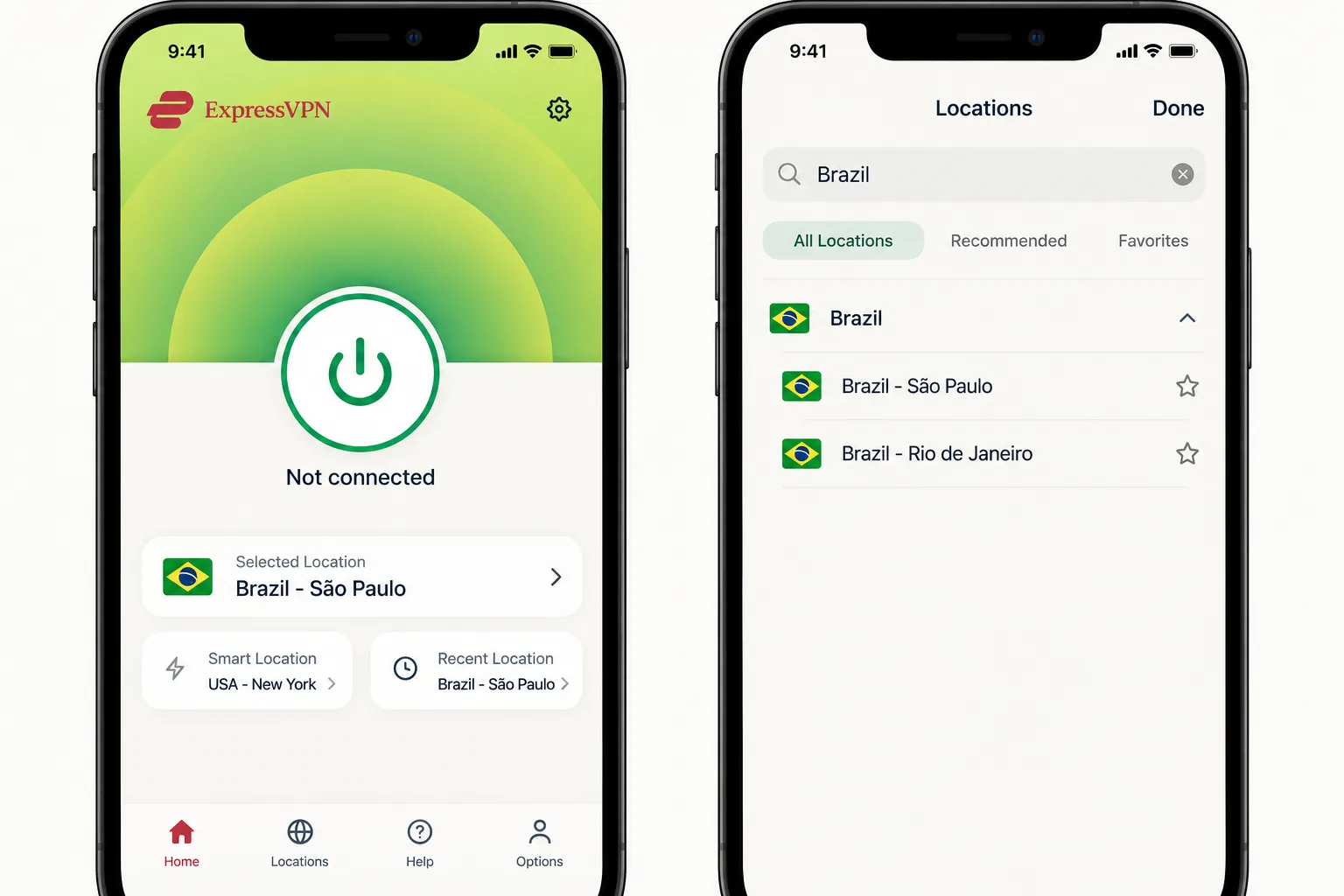
If Proton rewards people who like to tweak settings, ExpressVPN suits people who never want to open the settings at all. Its apps are the simplest on this list, though they offer few advanced options to adjust. When we had a question, its 24/7 live chat answered quickly.
ExpressVPN has two Brazil server locations. Both give Sao Paulo IP addresses and run on physical 10 Gbps servers rather than virtual ones. Its wider network covers more than 100 countries. The Lightway protocol connects quickly, and the apps also support OpenVPN and IKEv2. TrustedServer means every server runs from RAM, Network Lock acts as the kill switch, and Threat Manager blocks trackers and malware. You also get split tunneling, obfuscation and the MediaStreamer smart DNS for devices that can't run a VPN app.
We put ExpressVPN on Lightway head to head with NordVPN from Sao Paulo on a 300 Mbps line. ExpressVPN was fast, holding around 240 Mbps, but NordVPN came out ahead at about 252 Mbps. The bigger difference was in the app itself, which gave us little to change beyond picking a location and connecting. Streaming is broad, with US and Brazilian Netflix, Globoplay, Globo, Claro, HBO Max, Hulu, Prime Video and Disney+ all working.
For privacy, KPMG examined the TrustedServer system and ExpressVPN's no-logs claims as of 28 February 2025 and gave reasonable assurance that no activity logs are collected.
The price is the trade-off. ExpressVPN costs more than rivals with a similar core feature set, especially once it renews. Basic is $2.99 a month on the 2-year plan and renews at $99.95 a year. Advanced is $4.49 a month and Pro is $7.49 a month. Device limits rise with the tier, from 10 on Basic to 12 on Advanced and 14 on Pro. Every plan carries a 30-day money-back guarantee for new users. Our ExpressVPN review breaks down what the higher tiers add.
Pros
- Simplest apps of the five picks
- Physical 10 Gbps servers for both Brazil locations
- Works with Globoplay, Claro and Brazilian Netflix
- Quick 24/7 live chat
Cons
- Few advanced settings to adjust
- Renewal prices climb sharply
- Slower than NordVPN head to head
4. Surfshark: best cheap Brazil VPN with unlimited devices
Surfshark costs less than ExpressVPN and beat NordVPN on slow connections in our runs. On WireGuard it ran very nearly as fast as NordVPN. On our 45 Mbps home line it was the quickest service on that line, at about 39 Mbps. Over a Sao Paulo connection, TV Gazeta, RBTV and TV Cultura all streamed smoothly.
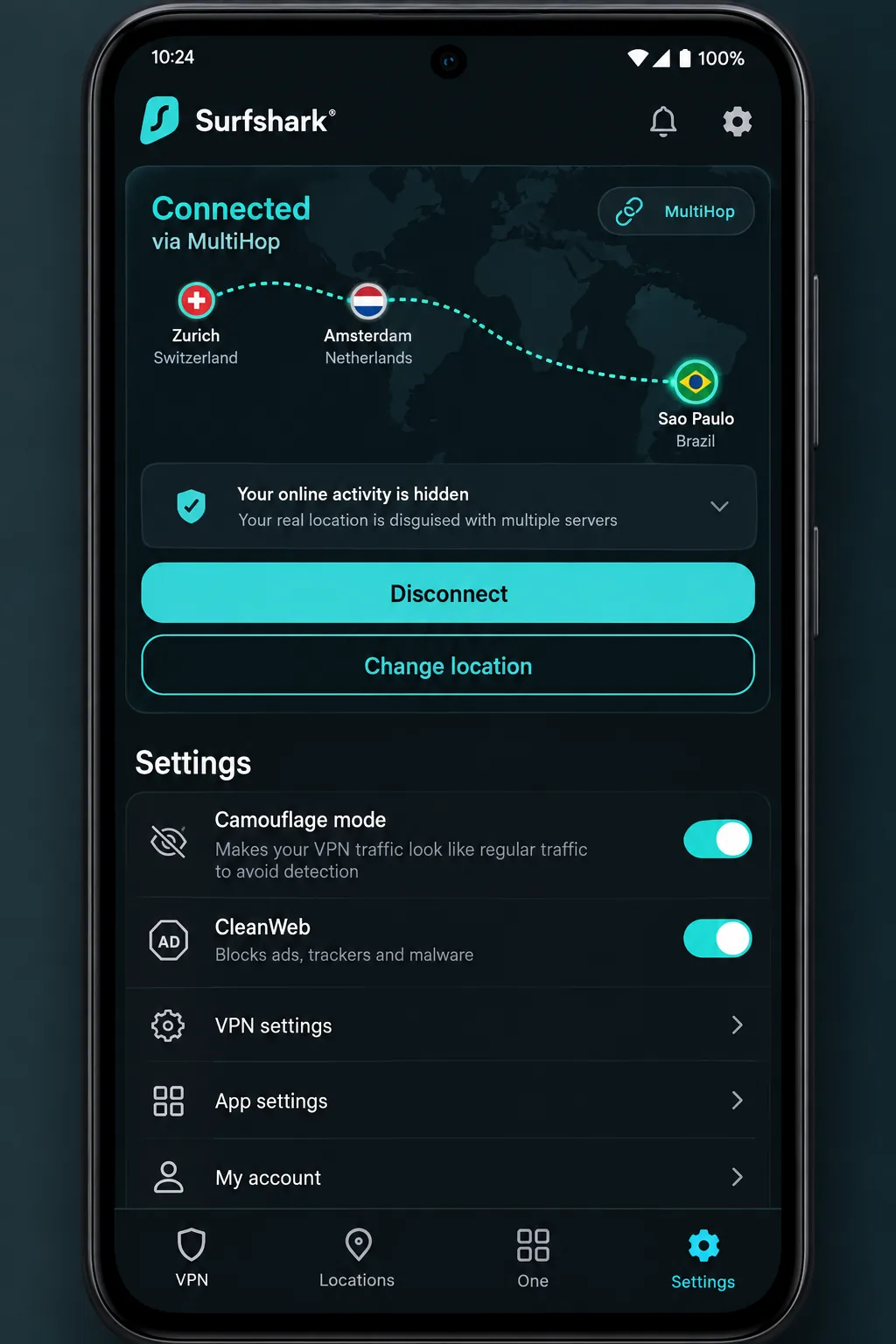
Surfshark's two dozen or so Brazilian servers sit in Sao Paulo, on 10 Gbps ports and RAM-only hardware. The wider network spans 4,500+ servers in 100 countries. Alongside WireGuard, OpenVPN and IKEv2, you get the CleanWeb ad and tracker blocker, a kill switch, Bypasser split tunneling, MultiHop, Camouflage mode for obfuscation, NoBorders for restrictive networks, and a rotating IP option. Streaming covers Globo and SBT, plus US Netflix, Hulu, Prime Video, BBC iPlayer and HBO Max.
Two quirks showed up in our testing. Turning on MultiHop cut our speed noticeably, so we'd keep it for sensitive sessions only. The app also doesn't flag which servers suit P2P, so we had to ask live chat. Deloitte re-verified Surfshark's no-logs policy in a second assurance announced on 20 June 2025.
The real draw is value. Surfshark allows unlimited simultaneous connections on every plan, so one subscription covers a whole household. Starter is $2.49 a month on the 2-year plan, billed as $67.23 for the first 27 months. It renews at a noticeably higher rate. A 30-day money-back guarantee applies. There's more in our Surfshark review.
Pros
- Unlimited simultaneous connections
- Quickest pick on our 45 Mbps home line
- Smooth Brazilian channels from Sao Paulo
- Cheaper than NordVPN and ExpressVPN on a 2-year plan
Cons
- MultiHop slows connections noticeably
- No P2P server labels in the app
- Renewal price is noticeably higher
5. CyberGhost: best for streaming in Brazil
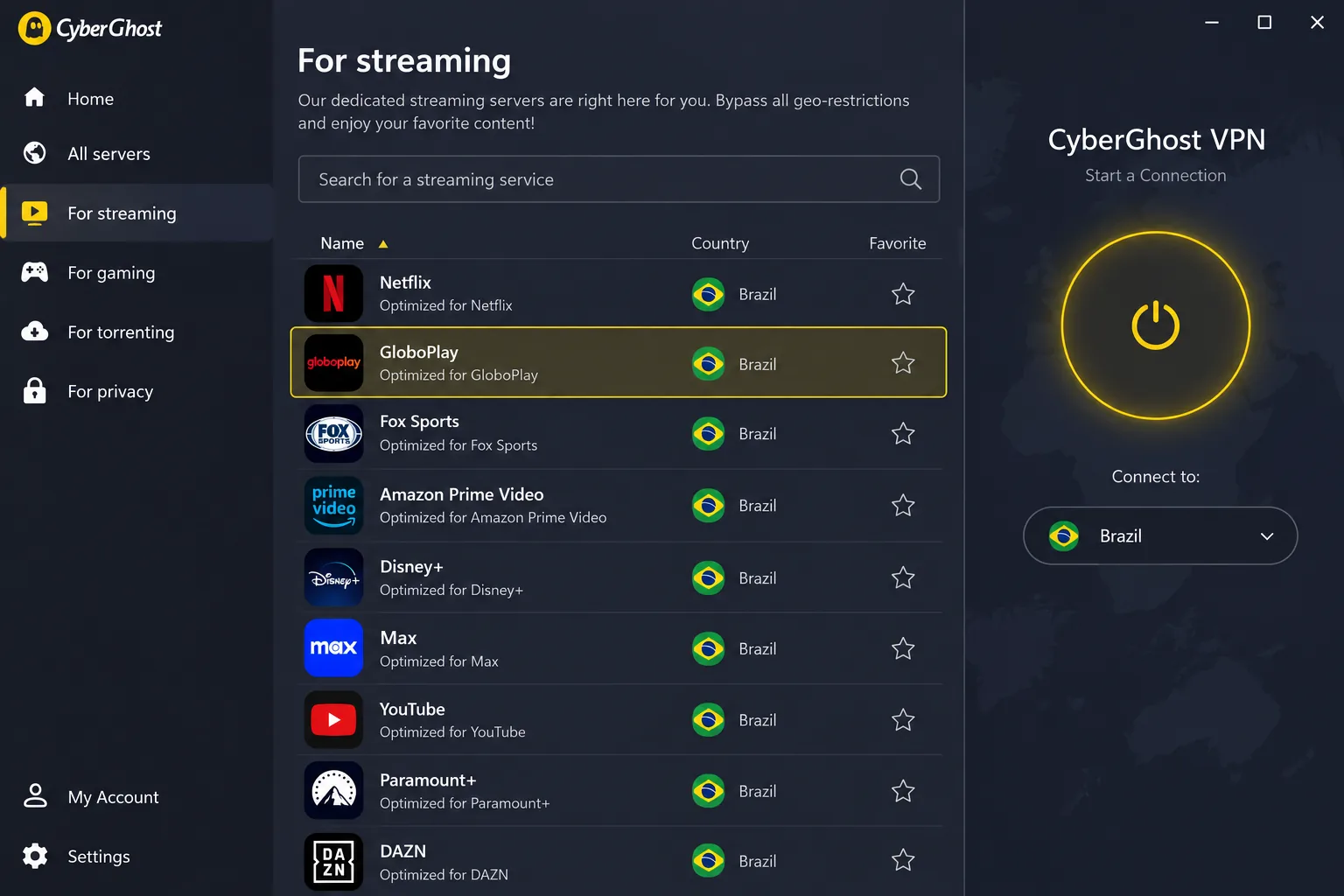
Where Surfshark makes you hunt for the right server, CyberGhost labels its servers by service. We picked the Brazil server marked for GloboPlay or Netflix Brazil and were streaming straight away, with no trial and error. For people who mainly want Brazilian TV abroad, that saves a lot of time.
CyberGhost runs 70-odd servers in Brazil, all in Sao Paulo, with no Rio option. Its network covers 100 countries. You get WireGuard, OpenVPN and IKEv2, NoSpy servers, a kill switch, a Content Blocker, split tunneling and a dedicated IP add-on. It has no obfuscation, which matters only if you expect a network to block VPN traffic.
Two habits suit travellers. CyberGhost auto-connects when it sees an unfamiliar Wi-Fi network, which helped in hotels and airports. On mobile, IKEv2 ran slightly faster for us than WireGuard. The one annoyance was Google CAPTCHAs, which popped up now and then while we were connected.
CyberGhost suits beginners more than power users, and its 7-device cap runs out quickly in a big household. Deloitte Audit Romania completed its third no-logs review of CyberGhost in 2025. The 2-year plan starts at about $2 a month, the 6-month plan costs $6.99 a month, and month to month costs $12.99. The 45-day money-back guarantee on the 6-month and 2-year plans is the longest here, while the monthly plan gets 14 days. Our CyberGhost review covers the rest of its feature set.
Pros
- Servers labelled for GloboPlay and Netflix Brazil
- 45-day money-back guarantee on longer plans
- Auto-connects on unfamiliar Wi-Fi
- Fast enough for 4K streaming
Cons
- 7-device limit
- No obfuscation
- Occasional Google CAPTCHAs while connected
Why you need a VPN in Brazil
All five picks cover the basics, but why does Brazil call for a VPN at all? You need one for privacy on shared networks, access to your home content, and a fallback when courts block a service. Brazil isn't a heavily censored country. Freedom House's Freedom on the Net 2025 report scores it 65/100, Partly Free, unchanged from the year before. Still, a few local quirks make a VPN worth considering for residents and visitors alike.
Public Wi-Fi in hotels, airports and cafes
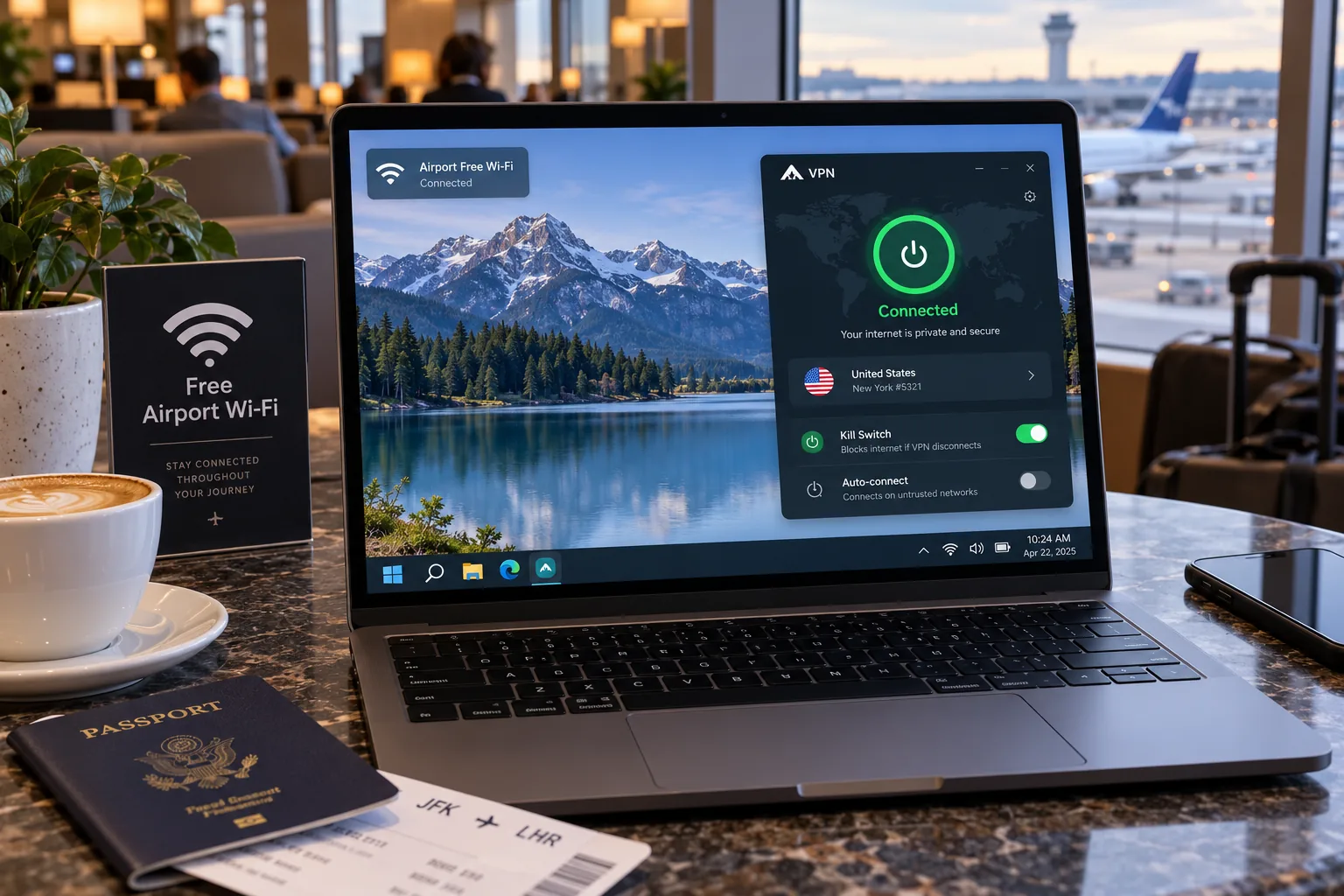
Open Wi-Fi in a hotel, airport or cafe lets anyone running the network see which sites you visit. A VPN encrypts that traffic before it leaves your device, which adds an extra layer of protection on networks you don't control. Turn on the kill switch so nothing slips out if the connection drops.
CyberGhost goes a step further by connecting automatically when it spots an unfamiliar network. Our guide to the best VPN for public Wi-Fi covers this scenario in more depth.
Streaming Globoplay and your home libraries
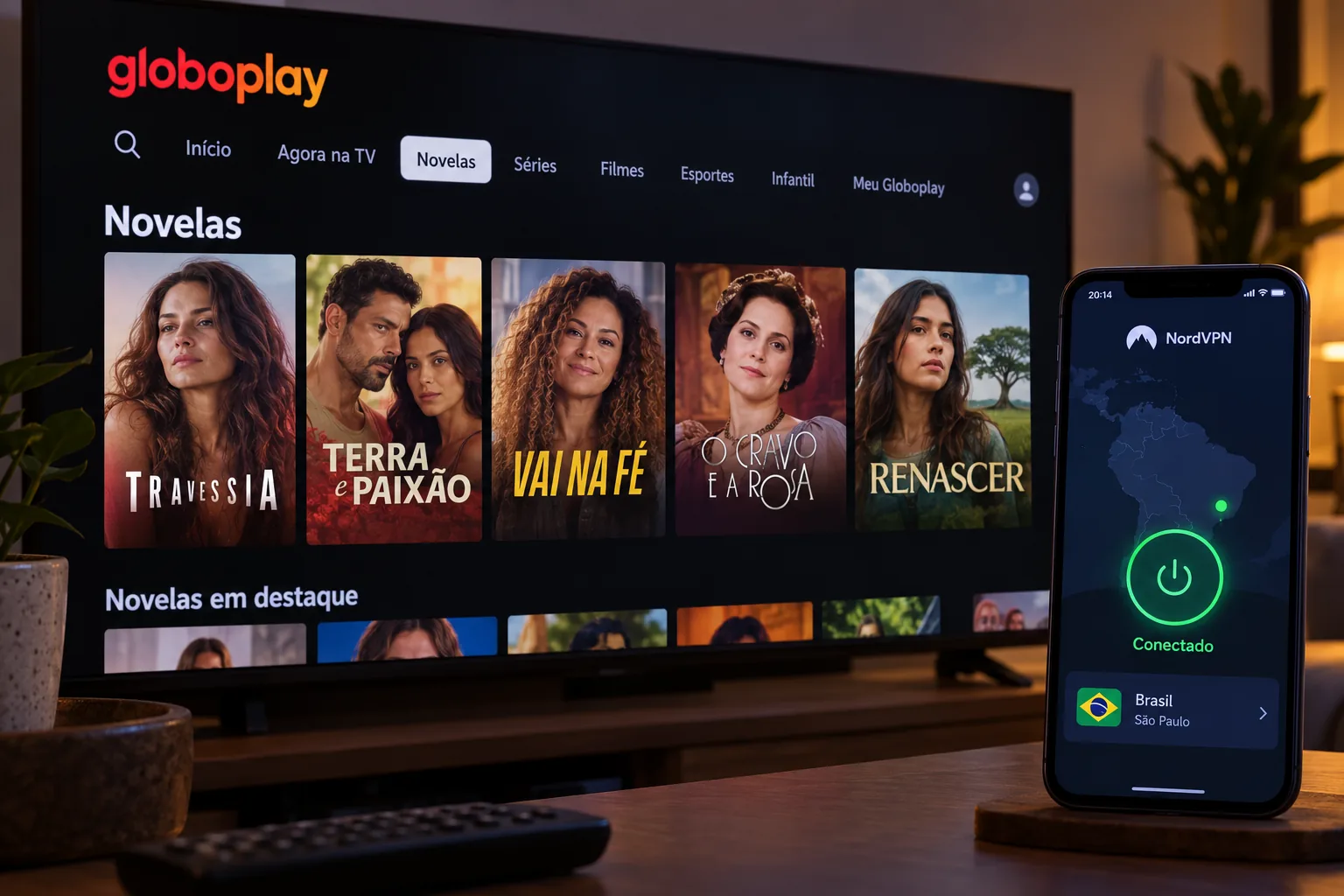
Grupo Globo's Globoplay launched in Brazil on 3 November 2015 and remains the main home of Globo's novelas, news and football. Its live channels are where Brazilians abroad run into trouble. Globoplay switches off its live broadcast feature automatically when an account's location is set outside Brazil, and live channel packages are sold only in Brazil.
In our testing, a Brazilian VPN IP did not bring those live channels back on an account whose location was set abroad. On-demand content behaves differently from live TV, so check which part of Globoplay you need before you rely on a VPN for it. Brazilian broadcasters such as TV Cultura, RBTV and TV Gazeta streamed smoothly once we were on a Sao Paulo server.
The reverse problem hits visitors. Your home streaming services show Brazil's catalogue once you land, so you'll need a server back in your own country to see your usual library.
ISP logging under the Marco Civil
Brazil's internet law is the Marco Civil da Internet, Law No. 12.965, enacted 23 April 2014. It sets out how long your data is kept. Under Article 13, the law requires internet connection providers to keep connection records for 1 year, and authorities can request longer retention. Article 15 requires commercial apps and websites to keep access logs for 6 months.
A VPN doesn't change what your ISP must record, but it changes what that record says. Your provider logs a connection to a VPN server rather than every site you visit. That protection depends on the VPN keeping no logs of its own, which is why every service we recommend is audited.
The Marco Civil requires providers to keep these connection records confidentially, so they aren't public. The retention period is still the part that matters for VPN users, because it decides how long a record of your connections exists.
Court-ordered blocks and the X ban
Brazilian courts have blocked major services nationwide more than once. A Sao Paulo state judge ordered a 48-hour WhatsApp block in December 2015, which another court lifted the next day. In May 2016, a Sergipe state judge ordered Brazil's main mobile operators to block WhatsApp for 72 hours.
The best-known case is X. On 30 August 2024, Justice Alexandre de Moraes ordered providers to block X after it failed to name a legal representative in Brazil. The block took effect early on 31 August 2024. The order set a daily fine of R$50,000 (about $9,000) for people or companies using a VPN or other means to reach X. The order also told Apple and Google to pull VPN apps from their stores, but that part was suspended the same day. X was restored on 8 October 2024 after it complied with the court.
The 2024 order threatened a fine of up to R$50,000 a day for using a VPN to reach X specifically. It did not ban VPNs in general, and the order to pull VPN apps from app stores was suspended the same day it was issued.
Banking apps while traveling
Foreign banking apps can be fussy about where you log in from. When we connected to a server in our home country, our foreign banking sessions kept working normally while we were in Brazil. If you also use Brazilian bank apps, split tunneling lets you send those apps outside the VPN while everything else stays protected. Proton VPN, ExpressVPN, Surfshark and CyberGhost all include it.
How to get a Brazilian IP address with a VPN
Getting a Brazilian IP address takes only a few steps with any of our picks:
- Sign up for a VPN with Sao Paulo servers, such as NordVPN.
- Download the app for your device and log in.
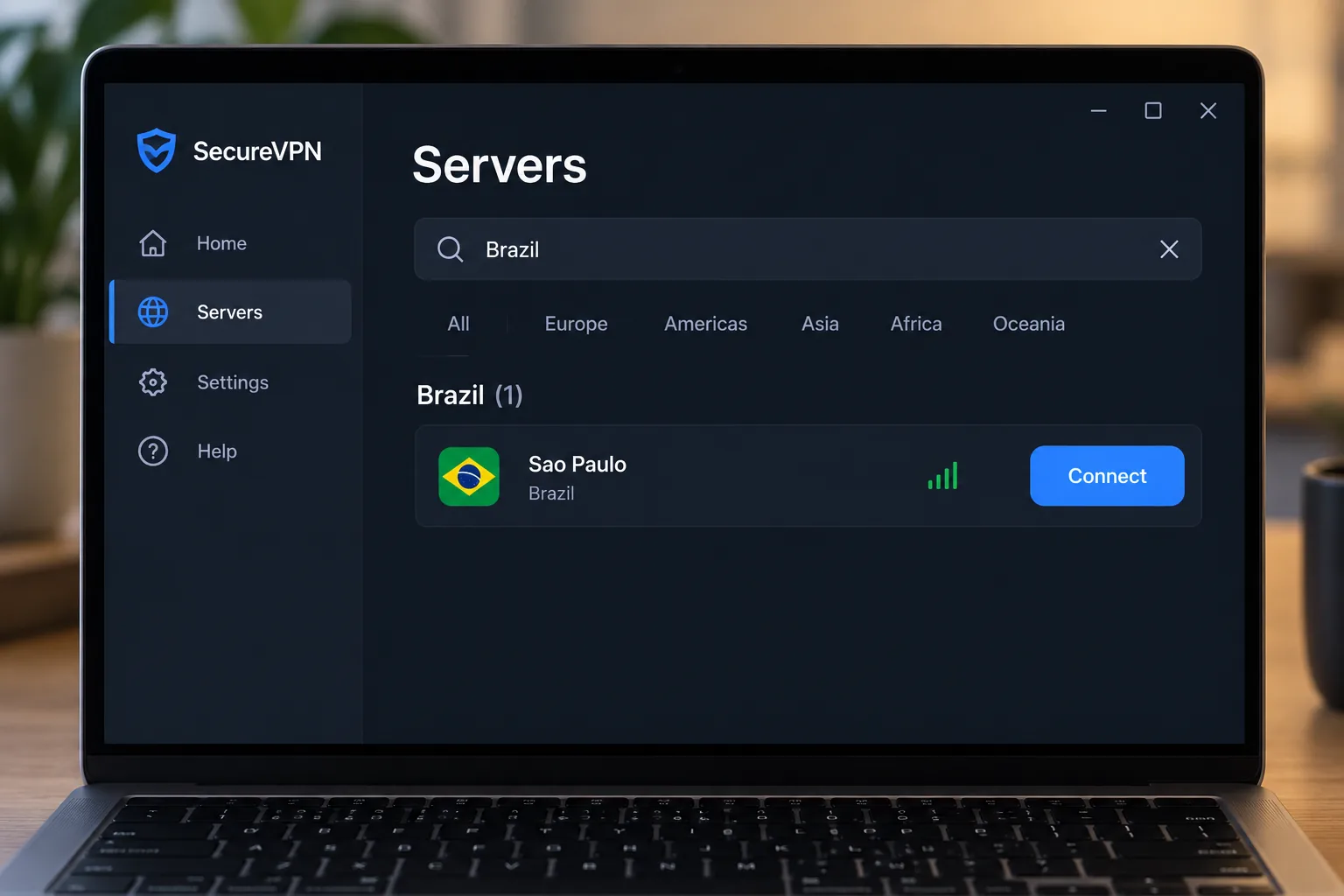
- Open the server list, search for "Brazil" and connect to a Sao Paulo server.
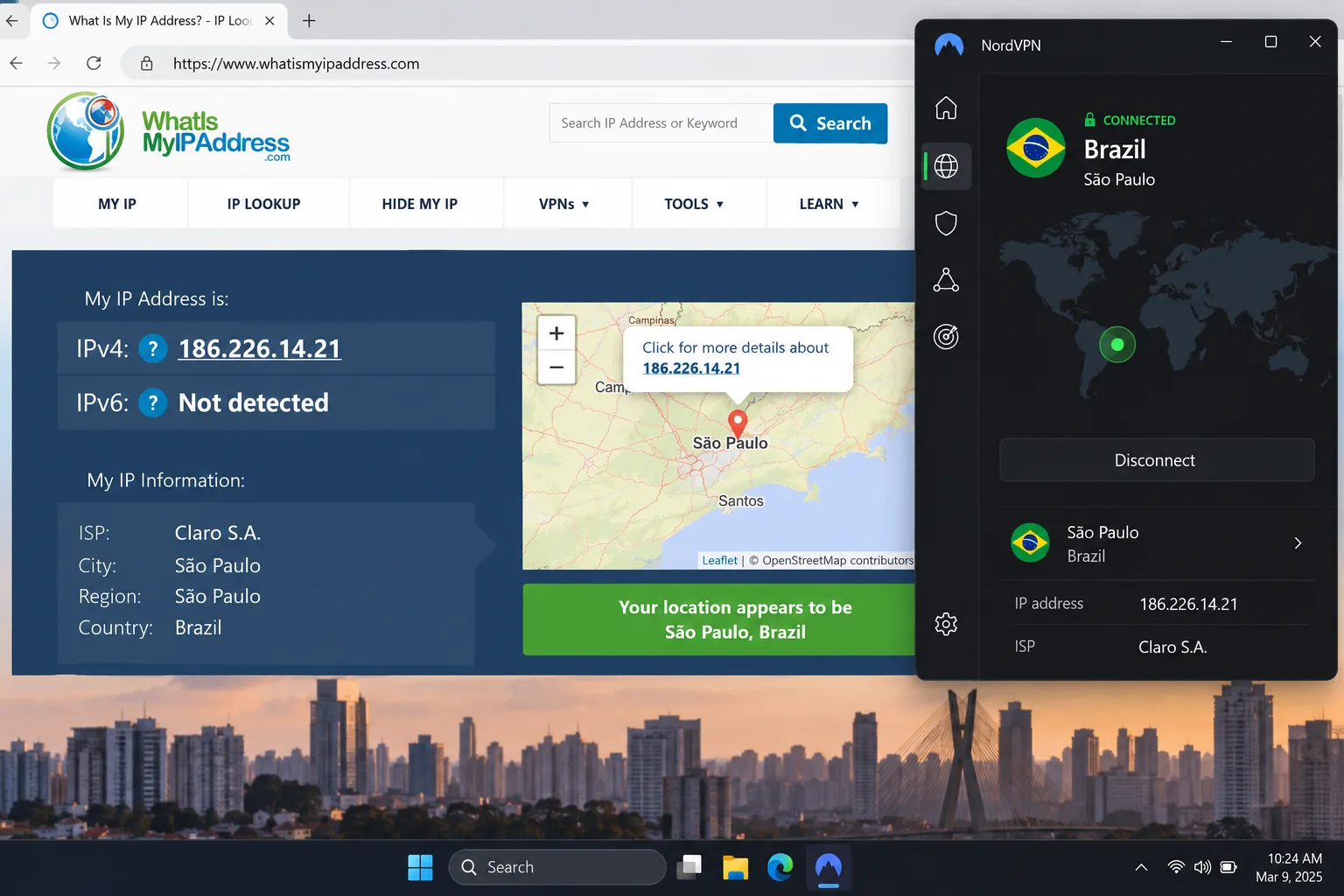
- Check your new IP on any IP-lookup site to confirm it shows a Brazilian location.
- Clear your browser cookies or reopen the streaming app, then load the service you want.
If the first server is slow, connect to a different one in Sao Paulo. Speeds vary a lot between servers on the same provider. For a broader walkthrough that applies to any country, see our guide on how to change your location with a VPN.
Brazilian vs home-country servers
Use a Brazilian server when you want Brazilian content or services: Globoplay on-demand, Claro Video, Telecine or Brazilian Netflix. Use a home-country server when you're in Brazil and want your own streaming libraries or banking apps to behave normally.
For plain privacy on public Wi-Fi, choose the nearest server for the best speed, which in Brazil means Sao Paulo. Don't expect a Rio location to route differently: every Brazilian server we found across the big providers exits through Sao Paulo, so a "Rio" label won't change where your traffic leaves the network.
How we tested VPNs for Brazil
We tested each VPN the way you'd use it in or for Brazil. We connected every service to its Sao Paulo servers and tried more than one server per provider, because speeds varied between servers on the same network. NordVPN, Surfshark and CyberGhost also went through speed checks on a slower 45 Mbps home line. For every app, we noted how quickly a newcomer could get it installed and connected.
For streaming, we loaded Brazilian broadcasters including RBTV, TV Aratu ON, TV Gazeta and TV Cultura from Sao Paulo IPs. We used CyberGhost's service-labelled servers for GloboPlay and Netflix Brazil, and checked how Globoplay's live channels behaved on an account set abroad. We also connected to home-country servers from Brazil to see whether foreign banking sessions held up.
Beyond hands-on use, we scored each service on:
- Privacy: an independent no-logs audit from 2025 or later, plus RAM-only servers where offered.
- Security: kill switch, leak protection, modern protocols and obfuscation.
- Usability: app layout, setup time, and quirks such as CAPTCHAs.
- Value: starting price, renewal price, device limits and the money-back guarantee.
Our ranking follows the scores in our full review of each provider.
Are VPNs legal in Brazil?
Most readers ask this first after hearing about the X order, and the answer is yes. VPNs are legal in Brazil. No Brazilian law prohibits or restricts VPN use. The 2024 X order targeted using a VPN to reach X specifically, not VPN use in general, and that block ended when X was restored.
A VPN doesn't make illegal activity legal, though. Brazil restricts unlicensed fixed-odds betting, and a VPN won't get you around that because payment restrictions still apply.
Free vs paid VPNs for Brazil
Legal or not, a VPN is only as trustworthy as its business model, and free VPNs are a poor fit for Brazil. Many free services log and sell browsing data, inject ads and trackers, and leak information. They also cap your speed, data allowance and server choice. Most of them have no Brazilian servers at all, which defeats the point for anyone abroad who wants Globoplay.
Proton VPN's free plan is the honest exception, but it won't get you a Brazilian IP. Proton Free connects 1 device at a time to servers in 10 countries chosen at random, and it has no data limit. It's a reasonable privacy tool for public Wi-Fi in Brazil. It can't stream and doesn't include Brazil, so it's useless for Globoplay.
A free VPN that sells your data undoes the reason you installed it. If a free service doesn't publish an independent no-logs audit, assume your browsing is the product.
A paid plan doesn't need to be expensive. All five picks start at under $3.50 a month on a 2-year plan, and every pick here offers a money-back guarantee of at least 30 days on its long plans. That means you can test Sao Paulo speeds and streaming risk-free before you commit. Our list of the best free VPNs covers the safer free options if you only need basic protection.
Final thoughts
NordVPN is the VPN we'd install first for Brazil. For most readers, though, the choice comes down to where they are rather than which feature list looks longest.
If you live in Brazil, your main needs are privacy from your ISP and on public Wi-Fi. That makes the nearest Sao Paulo server, a kill switch and split tunneling for a fussy bank app more important than streaming extras. If you're a Brazilian abroad, set your expectations for Globoplay first. A Brazilian IP gets you on-demand shows and broadcasters like TV Cultura, but it won't bring back live channels on an account set outside Brazil. If you're only visiting for a couple of weeks, the money-back window matters more than the long-term price, and CyberGhost's 45 days on its longer plans gives you the most room. Whatever your situation, check the renewal price before you sign up, because introductory 2-year prices such as ExpressVPN's and Surfshark's climb once the first term ends.
Use the guarantee to try your pick on your own connection and the Sao Paulo server you'll actually use.